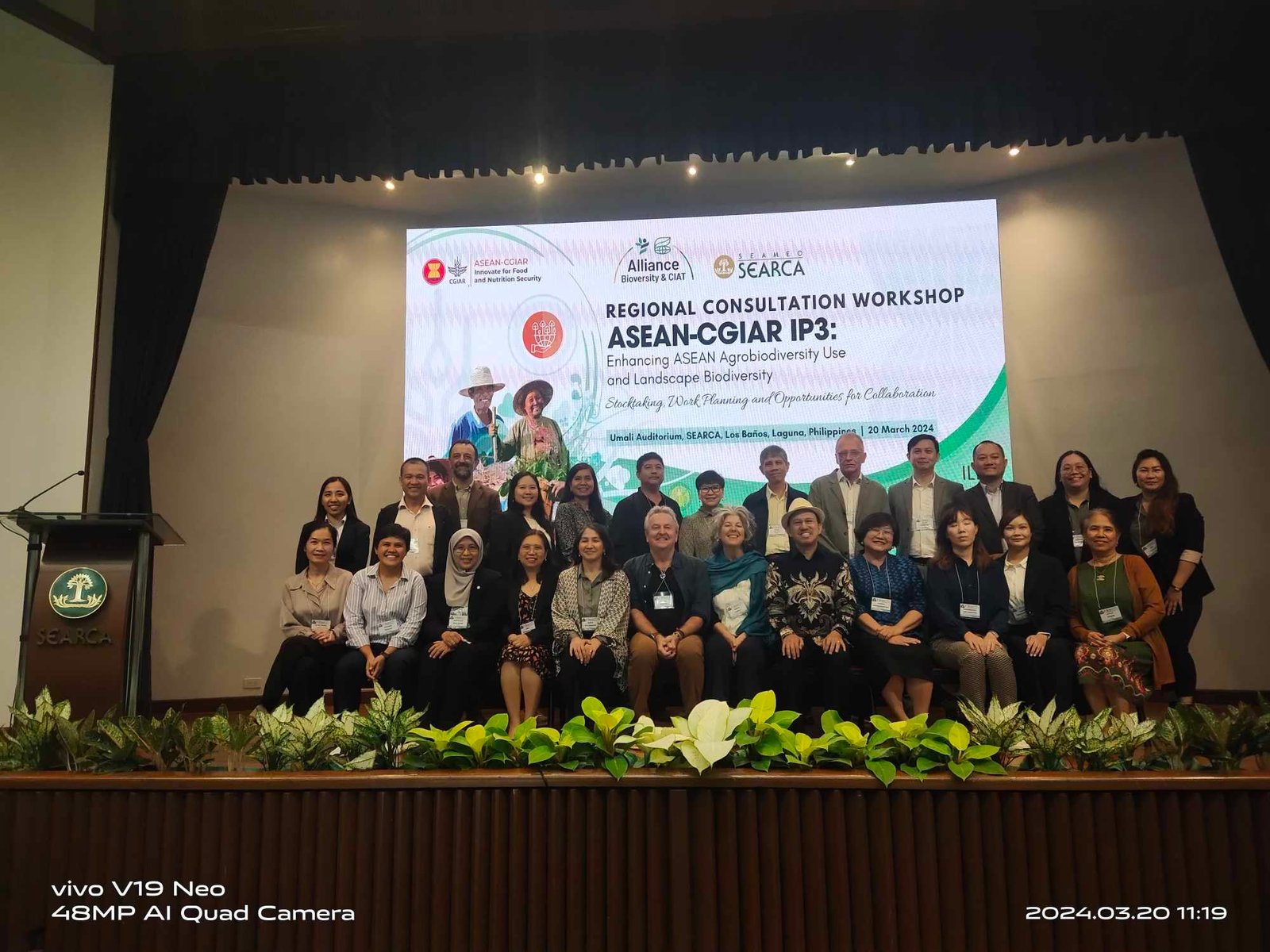
LOS BAÑOS, LAGUNA (March 20, 2024)–IIRR has been identified as a key partner for community-based agrobiodiversity conservation under the ASEAN-CGIAR Innovate for Food and Nutrition Security Program (IP3), following its consistent engagement and field-proven work in biodiversity-rich communities in the Philippines.
At the ASEAN-CGIAR IP3 Regional Consultation Workshop, held at the SEARCA Headquarters in Los Baños, Laguna, IIRR Philippine Country Director Emily Monville Oro and Food Security and Nutrition (FSN) Program Manager Ma. Shiela Anunciado joined nearly 20 participants representing Thailand, Laos, Vietnam, and the Philippines.
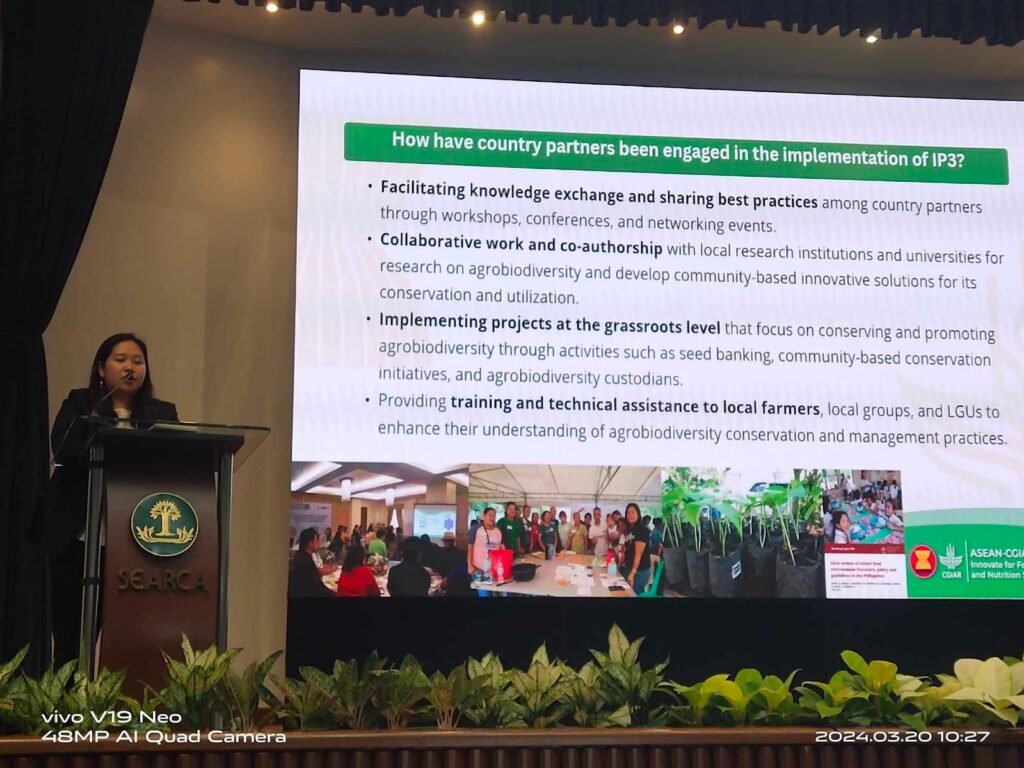
FSN Program Manager Ma. Shiela Anunciado presents IIRR progress in the implementation of IP3
The regional gathering served as a platform to share national findings and shape regional directions for IP3’s third intervention package, which seeks to:
- Diversify sustainable production;
- Enhance diets and nutrition;
- Increase incomes and livelihoods; and
- Foster resilient, biodiverse landscapes.
Since 2023, IIRR has supported national consultations in the Philippines by providing technical insights on the country’s agrobiodiversity status, value chains, and development barriers, particularly through scoping studies on Tinawon heirloom rice and the analysis of agri-projects in the Cordillera region.
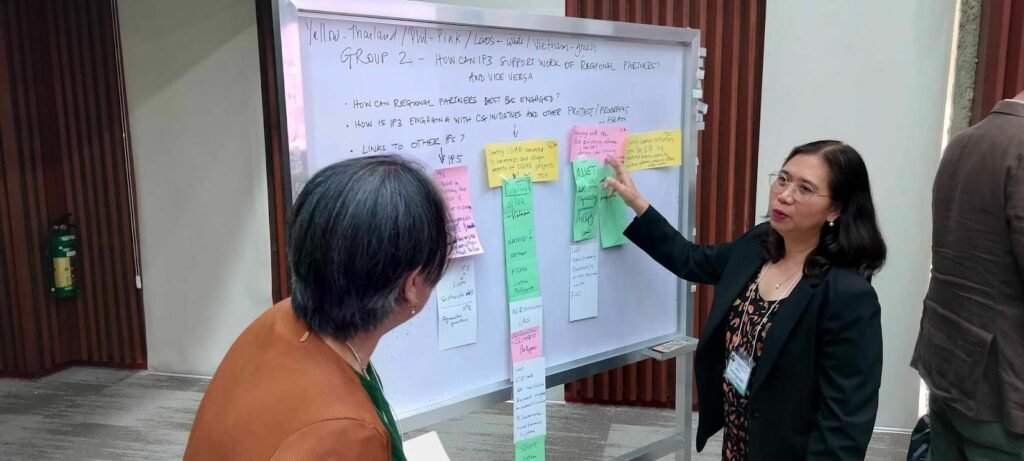
IIRR Philippine Country Director Emily Monville Oro contributes during breakout sessions focusing on supporting regional-level IP3 partnerships
IIRR’s community-based conservation efforts, including seed banking, participatory plant breeding, and biodiversity gardens, were highlighted as scalable models by CGIAR, reinforcing the importance of localized, grassroots-led action for biodiversity utilization.
Participants from across ASEAN deliberated on shared challenges, knowledge gaps, and opportunities to align regional research and policy to food systems transformation, with agrobiodiversity conservation at the core.
Moving Forward
Strengthening multi-sectoral collaboration and identifying context-specific threats and drivers of biodiversity loss remain critical to sustaining conservation outcomes. IIRR is committed to deepening its role in shaping inclusive, knowledge-based solutions for resilient and biodiverse food systems in the region.
Recent News