PH Experts Join Global Push for Smarter, Inclusive Investment in Fruits and Vegetables
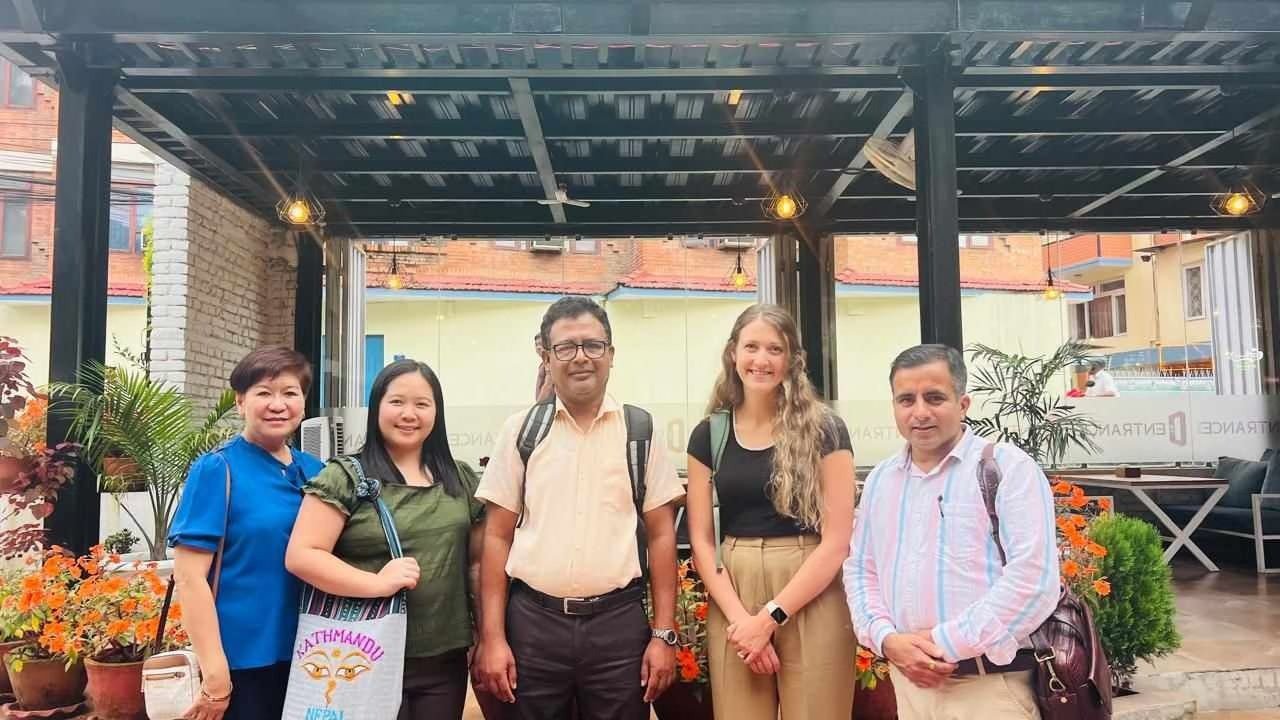
Left-right. Dr. Imelda Agdeppa (PhilFRESH Country Coordinator), Ma Shiela Anunciado (IIRR), Aheeyar Mohamed (Sri Lanka FRESH Coordinator), Katheryn Gregerson (UC Davis, and Krishna Sapkota (Feed the Future Lab, Nepal)
Kathmandu, Nepal (August 14–16, 2024) –As global efforts to make fruits and vegetables more accessible and sustainable gain momentum, two Filipino experts were at the heart of an international training workshop held in Nepal, aimed at mapping investments and scaling innovations with gender in mind.
Shiela Anunciado, IIRR Program Manager of the Food Systems and Nutrition (FSN) Program, and Dr. Imelda Agdeppa, Country Coordinator for the One CGIAR Initiative on Fruit and Vegetables for Sustainable Healthy Diets (FRESH), represented the Philippines at the three-day workshop in Kathmandu. The event was spearheaded by the Feed the Future Innovation Lab for Horticulture, in collaboration with the World Vegetable Center, FRESH, and several international research institutions.
The workshop trained facilitators from 10 countries, including the Philippines, Ghana, Sri Lanka, and Guatemala, on how to conduct in-country horticulture investment workshops. The focus: to assess how governments, private industry, academia, and international research bodies are funding the fruits and vegetables sector.
The initiative is part of a global study analyzing public and private investment flows in horticultural research and development. Countries from Africa, Asia, Central America, the United States, and Germany are all participating, with the goal of informing smarter, data-driven policies and funding strategies that promote sustainable and nutritious diets.
Beyond technical training, participants also had a front-row seat to a live investment workshop held in Nepal, giving them a deeper look at facilitation styles and stakeholder dynamics.
The workshop also featured a GenderUp session, led by UC Davis’ Katheryn Gregerson. GenderUp is an interactive tool designed to guide research teams in scaling agricultural innovations responsibly and inclusively. By identifying the specific needs, roles, and constraints of different social groups, the tool helps shape strategies that ensure equitable access to innovation benefits.
Recent News