Experts Identify 22 Indigenous Crops for Conservation Under FRESH Initiative
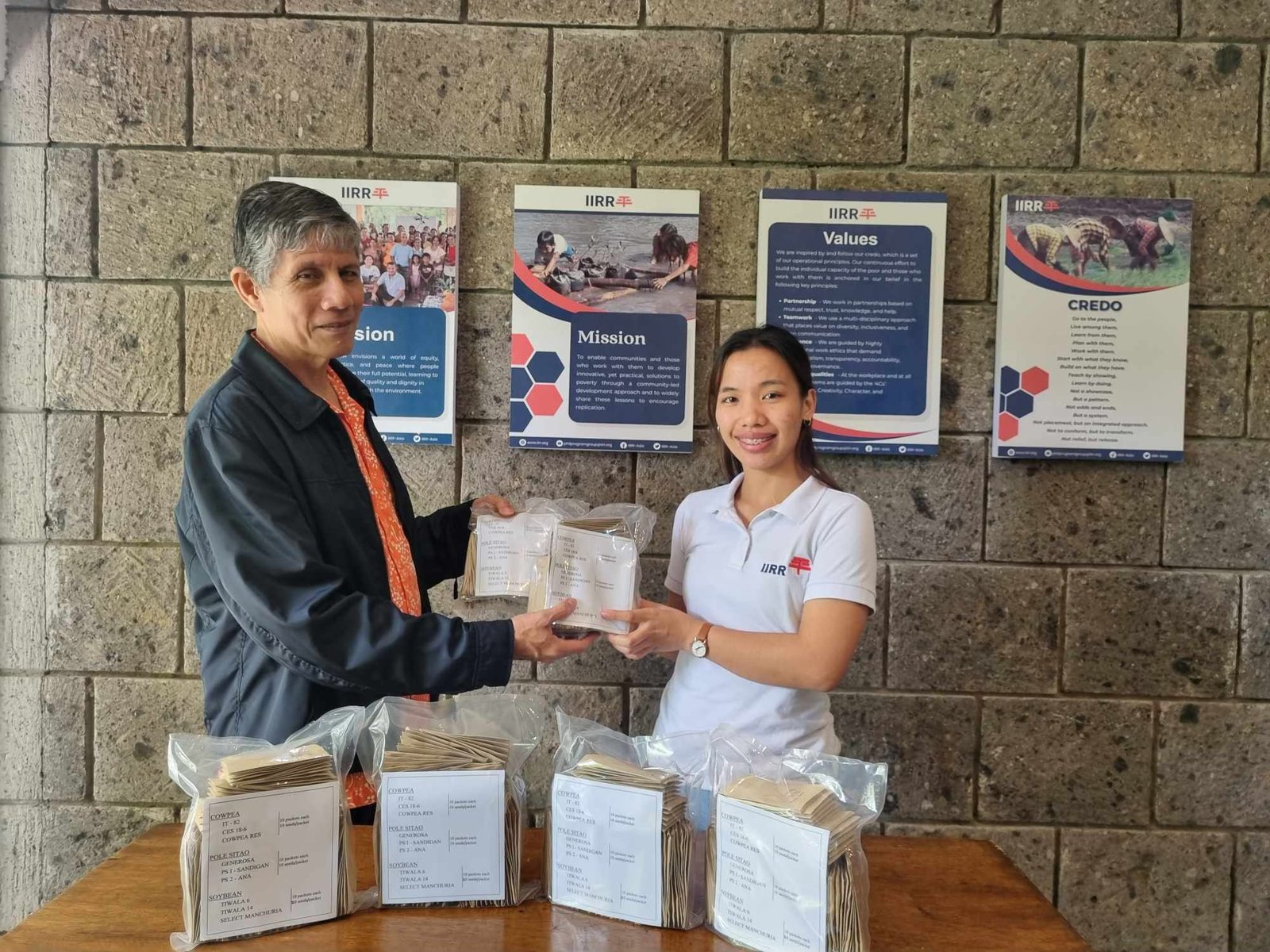
SILANG, Philippines (January 2024) — The International Institute of Rural Reconstruction (IIRR), in collaboration with the Institute of Plant Breeding of the University of the Philippines Los Baños (IPB-UPLB), conducted a workshop focused on the conservation and collection of priority indigenous vegetables under the FRESH Initiative.
The workshop aimed to support the conservation and utilization of traditional vegetable crops to strengthen food security, nutrition, livelihoods, and climate resilience in both rural and urban communities.

Held as part of Work Package 2 of the CGIAR FRESH Initiative, the workshop identified gaps in the collection of 22 priority crops in the national genebank, particularly in target regions across the Philippines.
The priority vegetable crops identified for conservation and collection include:
- 1.Aibika (Abelmoschus manihot)
- Batuan (Garcinia binucao)
- Himbabao (Broussonetia luzonica)
- Bagbagkong (Telosma procumbens)
- Cassava (Manihot esculenta)
- Cowpea (Vigna unguiculata subsp. unguiculata)
- Jute mallow (Corchorus olitorius)
- Lima bean (Phaseolus lunatus)
- Moringa (Moringa oleifera)
- Pako (Diplazium esculentum)
- Philippine fig (Ficus pseudopalma)
- Pigeon pea (Cajanus cajan)
- Rice bean (Vigna umbellata)
- Roselle (Hibiscus sabdariffa)
- Sessile joyweed (Alternanthera sessilis)
- Sickle senna (Senna tora)
- Slender amaranth (Amaranthus viridis)
- Spiny amaranth (Amaranthus spinosus)
- Slender carpetweed (Glinus oppositifolius)
- Taro (Colocasia esculenta)
- Malabar nightshade (Basella alba)
- Hyacinth bean (Lablab purpureus)
In addition, IPB-UPLB contributed key traditional crops such as cowpea, soybean, rice bean, pole sitao, amaranth, and jute mallow to support the CGIAR FRESH and Resilient Cities Initiatives.
These global initiatives are being implemented by IIRR in selected communities in Guinayangan, Quezon, and Quezon City, with the goal of promoting sustainable urban and peri-urban food systems.
Recent News